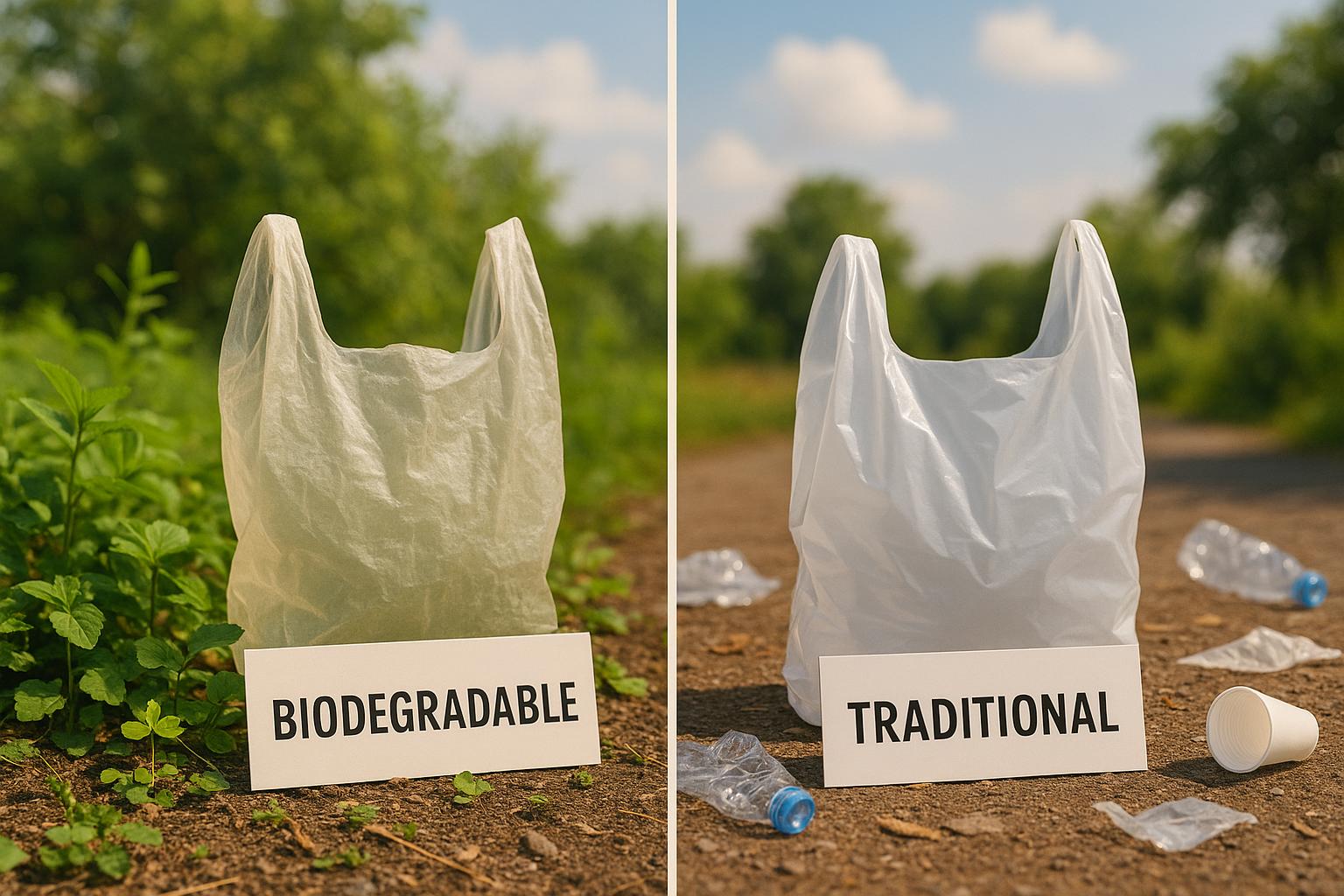
Waste management professionals face mounting pressure to address plastic pollution while maintaining operational efficiency. Biodegradable packaging solutions represent a significant advancement in this field. But not all solutions are equal. Understanding the science behind biodegradable packaging solutions helps facilities make informed decisions about sustainable waste management practices.
Understanding Biodegradable Packaging Solutions
What exactly are biodegradable packaging solutions? The term encompasses materials designed to break down through biological processes when exposed to environmental conditions. However, the critical distinction lies in whether these materials truly biodegrade completely or simply fragment into smaller persistent particles.
Traditional plastics break down. But not completely. They fragment. They become microplastics. These persistent particles accumulate. They cause long-term environmental problems. Biodegradable packaging solutions with proper technology address this by enabling complete breakdown without leaving persistent residues.
BioBottles™ powered by PlasticIQ™ Technology represent one category of biodegradable packaging solutions. These materials are scientifically verified under ASTM D6954 Tier 1-3 testing to prevent the formation of persistent microplastics. This verification matters. It distinguishes genuine solutions from marketing claims.
The Science Behind Effective Solutions
Effective biodegradable packaging solutions rely on scientific mechanisms. PlasticIQ™ is an oxo-biodegradable catalyst system integrated into HDPE and PP at approximately 1% concentration. When exposed to oxygen, heat, and UV light, it initiates controlled oxidative chain scission. This process reduces polymer molecular weight from over 200,000 Daltons to below 5,000 Daltons.
Below this threshold, the material becomes hydrophilic and bioassimilable by microorganisms. This is the key difference. It's not just fragmentation. It's complete breakdown through oxidation and microbial assimilation. This scientific process prevents persistent microplastic formation.
The ASTM D6954-24 testing standard verifies this process through three tiers: Tier 1 measures abiotic degradation through molecular weight reduction; Tier 2 evaluates biodegradation through CO₂ evolution; Tier 3 assesses ecotoxicity to ensure no harmful residues remain. This comprehensive verification ensures biodegradable packaging solutions truly prevent persistent microplastics.
Benefits for Waste Management Operations
For waste management facilities, biodegradable packaging solutions offer several operational advantages. First, these materials integrate seamlessly into existing operations. BioBottles™ look and function exactly like regular bottles. They require no special equipment. No unique handling procedures. No additional training for staff.
Second, recyclability matters. Biodegradable packaging solutions that maintain recyclability during normal use provide flexibility. BioBottles™ are recyclable when properly disposed—local programs may vary. This means facilities can manage these materials through standard recycling streams when possible, or through landfill operations when recycling isn't available.
Third, long-term environmental impact. Facilities implementing sustainable packaging solutions address persistent microplastic concerns proactively. This helps with environmental compliance. It supports long-term site management. It demonstrates environmental responsibility to regulators and communities.
Addressing Landfill Capacity Challenges
Landfill capacity remains a critical concern. Biodegradable packaging solutions that break down completely over time can help address this challenge. However, facilities need realistic expectations. Breakdown occurs over timeframes that matter for capacity planning, but specific timelines depend on landfill conditions—oxygen presence, temperature, UV exposure, and moisture levels all play roles.
Facilities evaluating biodegradable packaging solutions should consider local conditions. The same material may break down at different rates in different landfill environments. Consulting with manufacturers about local conditions provides valuable planning information.
Importantly, biodegradable packaging solutions complement rather than replace proper waste management practices. They provide environmental protection when packaging escapes containment. They don't eliminate the need for proper collection, sorting, and recycling infrastructure. They add an additional layer of environmental protection.
Regulatory Compliance Considerations
Regulatory frameworks increasingly address plastic pollution concerns. Facilities implementing biodegradable packaging solutions need to understand compliance requirements. The technology behind BioBottles™ conforms with the EU Packaging Waste Directive. It's the only oxo-biodegradable product to receive an ABNT Eco-label. These credentials support regulatory compliance efforts.
However, facilities should verify local regulations. Requirements vary by jurisdiction. Some regions have specific mandates for biodegradable packaging. Others have restrictions. Understanding regulatory requirements helps facilities make compliant decisions about biodegradable packaging solutions.
Implementation in Waste Management Systems
Implementing biodegradable packaging solutions requires minimal operational changes. BioBottles™ work exactly like regular bottles. They integrate into existing HDPE and PP handling procedures. Facilities don't need new equipment. They don't need process modifications. They can begin incorporating these materials immediately.
This practical approach makes adoption straightforward. Waste management professionals can evaluate biodegradable packaging solutions without operational disruption. They can test materials in specific applications. They can scale implementation based on results and needs.
The key is selecting solutions with proper scientific verification. Not all biodegradable packaging solutions are equal. Materials verified under ASTM D6954 Tier 1-3 testing provide confidence that they truly prevent persistent microplastic formation. This verification matters for both environmental protection and regulatory compliance.
Conclusion
Biodegradable packaging solutions represent an important advancement for waste management operations. BioBottles™ powered by PlasticIQ™ Technology offer scientifically verified solutions that prevent persistent microplastic formation while maintaining functionality and recyclability. They integrate easily into existing operations. They support environmental compliance. They address long-term capacity planning concerns.
For waste management professionals, these solutions provide a practical path forward. The technology is proven. The standards are verified. The implementation is straightforward. That combination makes biodegradable packaging solutions a serious consideration for modern waste management facilities addressing plastic pollution challenges.
Want to explore more? Review our BioBottles™ section for technical details, or check our article on preventing microplastics for related insights. Visit our FAQ section for additional information about biodegradable packaging solutions.